
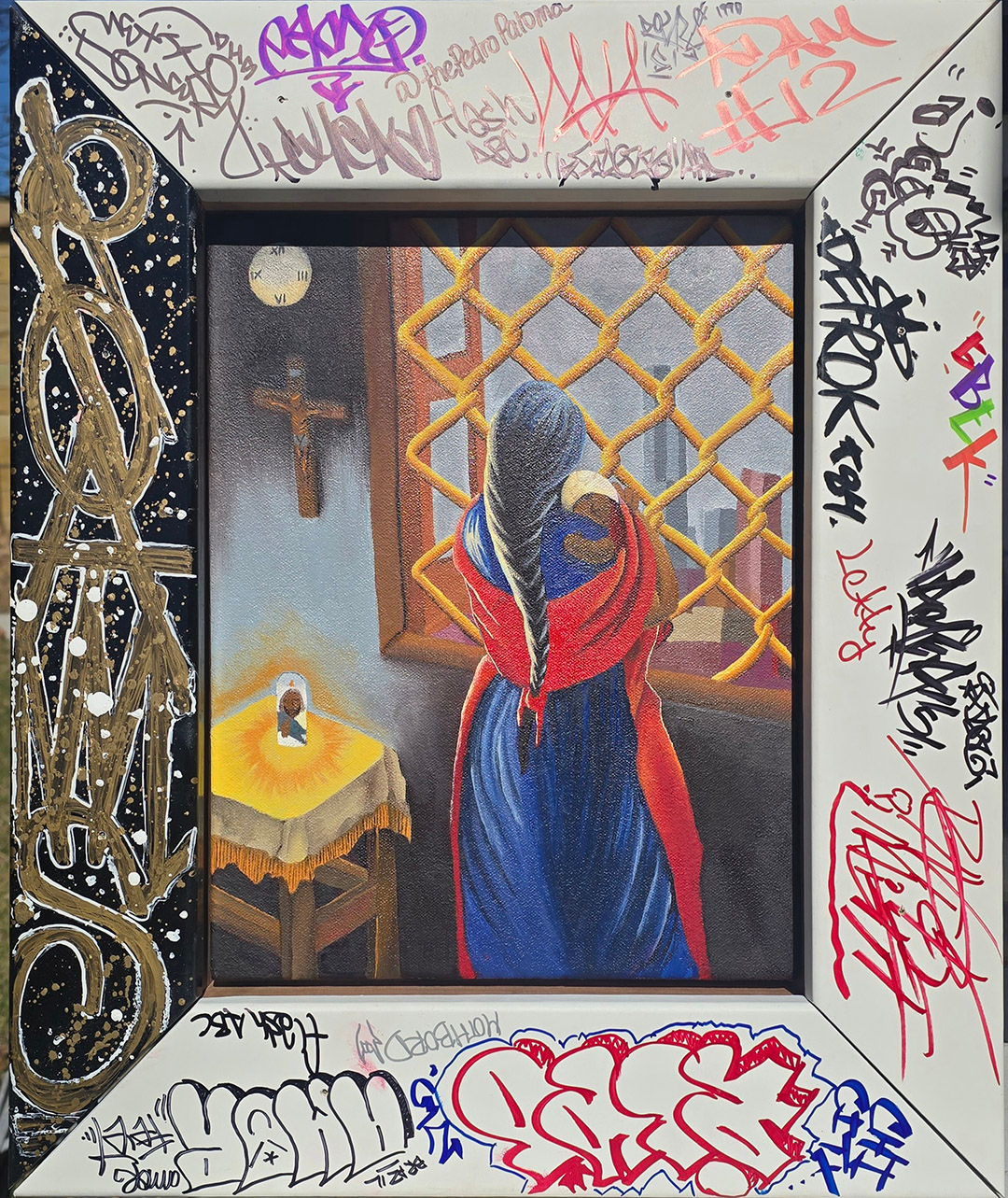
@rage_method_chi • La Jaola De Oro, Oil paint on gessoed canvas •
5 Questions:
1. My father arrived in the United States as a teenager without documentation and did not gain citizenship until I was a teenager myself. For most of my life, I believed my mother had come here legally as a child, but I later learned that she was undocumented as well and only gained citizenship after I was born. Realizing that changed how I understood my family’s story and my place within it.
2. Most of my extended family came to this country undocumented. For a long time, those experiences were rarely discussed openly, but in recent years, many of them have begun sharing their stories more honestly. At the same time, I have seen people I once believed were allies of the community begin expressing hostility toward undocumented immigrants, often framing those views as patriotism. Watching those shifts has made me think more deeply about loyalty, identity, and who truly stands beside a community when it matters.
3. Within my family, our culture has evolved in ways that reflect the reality of living in the United States. Many of our traditions have become Americanized. The way we celebrate holidays like Christmas, Easter and birthdays are different from how my parents and grandparents experienced them growing up in Mexico. I only know the versions I grew up with, but my elders often tell stories about how things were done before they came here. Those stories keep a connection alive even as traditions change.
4. I often ask my father, aunts, and uncles for advice about life and difficult situations. When we talk, I notice that we often want the same outcomes but approach them differently. Many of them were shaped by a culture where machismo and independence meant handling problems alone. My generation tends to process things differently. We arrive at similar conclusions, but the path we take to get there is not always the same.
5. My hope is simple in many ways. I want the opportunity that many families came to this country searching for. I want to work for myself, provide for my family, and build something that lasts beyond my lifetime. My goal is not only stability, but the chance to create something that my children can build on and that allows the next generation to move forward with more opportunity than the one before it. Scribe is also the founder of Rage Method, a Chicago-based apparel brand that extends his visual language into wearable form. The message behind the work remains simple: the ones kept silent will speak.
____
Bio | Art Statement
Scribe is a Chicago artist whose work explores pride, identity, and the cultural energy that shaped the city.
Born at Ravenswood Hospital and raised between Chicago’s North and South sides, his interest in art began early. As a kid, he collected Lowrider stickers from vending machines and spent hours recreating them on notebook paper, studying the bold lines, characters, and attitude behind the designs.
By his teenage years, he became involved in graffiti culture, experimenting with lettering and blending street styles with his own visual ideas. Over time, his curiosity expanded into photography and other forms of visual storytelling.
During the pandemic, he committed to seriously developing his craft, focusing on creating work that reflects the pride, loyalty, and identity of the communities that helped shape Chicago’s culture.
Today, Scribe primarily works in oil painting and digital illustration, while also drawing on years of experience with colored pencil. His work blends street influence with traditional techniques to create imagery people can recognize themselves in—art that acts as a badge of honor for the culture and communities that built the city.
______
Featured Artists | Akira – Light that Heals • Alejandra Lemus • Angie Zaveleta • Anna Silivonchik • Bane-xxa • Calayah • Catherine Economopoulos • Christian Joshua Varela Solis • Cindy Uriostegui • Darth Rudo • El Poeta • Grecia Solorio • Idil Duman • Javier Viñuela • Jimena Hernández Aguilar • Julia Obrien • Kaltra • Kybo • Lorena Salinas • Lydia Gunn • Mariana Perez • Mary Antar • Michael Azpeitia • Papaya Guayaba • Peauxline • Rita Garcia Šindelář • Roele Phantom • santi[ago alvarado] • Schantelle Alonzo “Mishipiku” • Scribe • Tai Kojro-Badziak • Toni Maugeri • Valeria Osornio • Victoria Park • Victoria-Riza • Yekseny Guerrero